Chamber cleaning system
Changing range of parts, small to medium production volumes, several process steps in one closed chamber.
Here it is not enough for the result to be right. It has to be verified.

1 · What is different in this industry
The last two are the actual difference. Residual contamination and process reliability are demanded by the automotive industry as well. Requirements specification and documentation shift the task from the result to the way there — and with it to the working method of the system builder.
2 · Which components are involved
Documented component class
Materials: we process aluminum, steel, stainless steel, brass, copper, zinc die casting and plastics alike. There is no limit at the material.
3 · How we verify the result
Process monitoring is qualitatively something different from the other four. In an industry that demands process reliability, that is the decisive point. The residual contamination analysis is carried out by an independent, accredited test laboratory — not by us. In an industry that demands verification, that is not a disadvantage but the point: the figure our release depends on comes from a third party that is not bound by our instructions.
The requirement is not tested at the end, but released stage by stage.
Release chain
If the agreed values are not reached, we do not release the system. And the documentation stays where the system stands: traceability down to the individual component is possible depending on the project — via barcode or DataMatrix recognition, the processing program can be selected per part and the result written back per part.
4 · Which solutions answer this
Changing range of parts, small to medium production volumes, several process steps in one closed chamber.
When the component has to be fully immersed or outer surfaces and cavities have to be treated at the same time.
Where high production volumes arise in short cycles and the range of parts is fixed at the planning stage.
We add ultrasonic cleaning with immersion and flooding processes, vacuum drying for very high drying requirements. The water quality is a design factor of its own — up to demineralized water when the residual contamination requirement and the downstream process demand it. Where needed, we design the water treatment as well.
The high-pressure water jet reaches bores and internal channels that mechanical tools cannot — reproducibly and in the cycle, which tips the balance where process reliability is required.
We design the pressure to the task, not from a catalog — and we avoid unnecessarily high pressure, because it damages components without removing the burr any better. Where surface quality is required, that is not a side remark but the core of the system design.
Loading and unloading, linking, buffering: with robot, handling and material flow and conveying technology from our own design engineering. Here, automation is at the same time a contribution to process reliability — an automated sequence is the reproducible one.
5 · Where we advise against it
6 · Where we stand in aerospace
Already realized
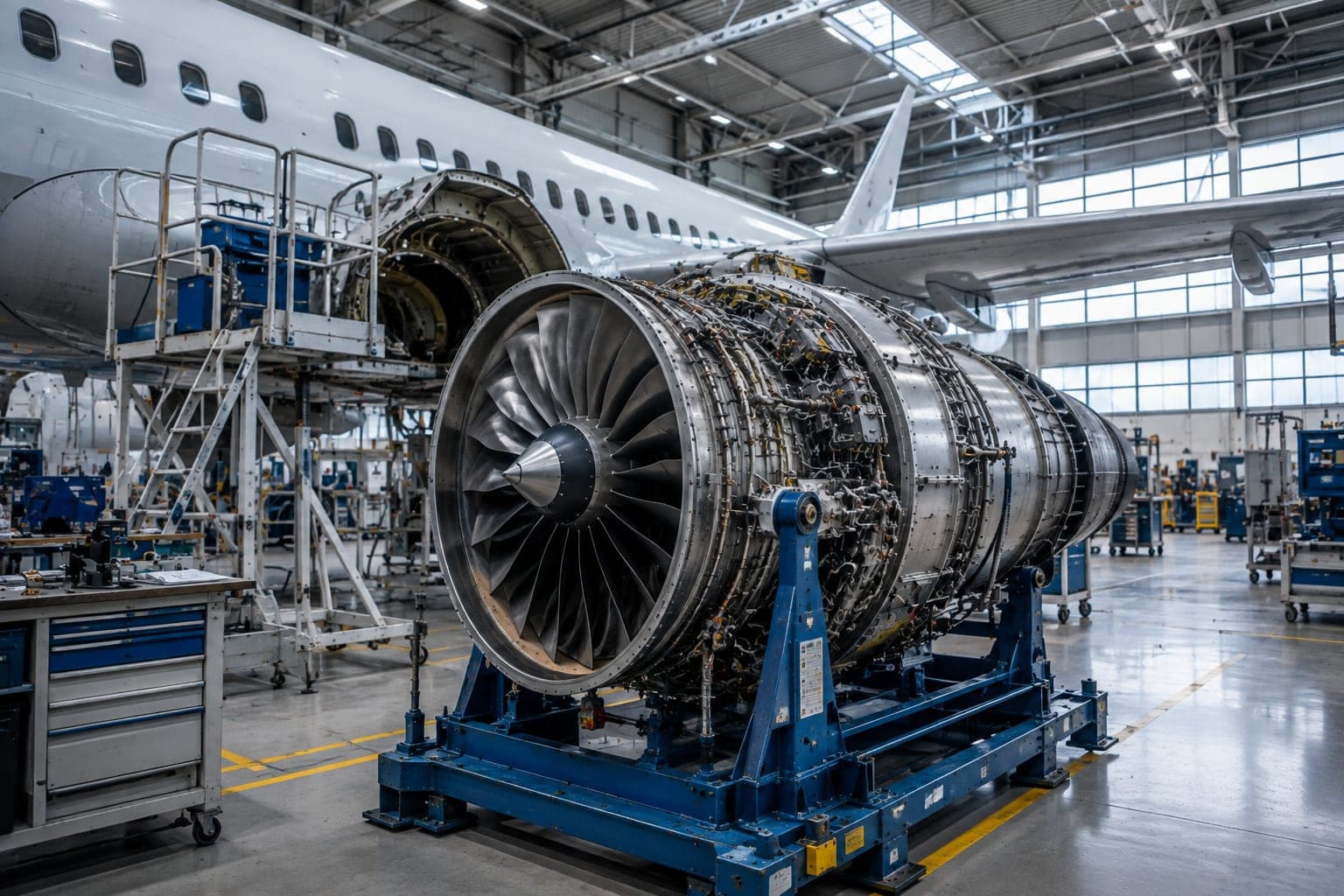
Our customers include manufacturers of commercial and military aircraft, helicopters and aero engines. The requirements are close to those of the automotive industry — the same combination of defined cleanliness, verification requirement and process reliability.
7 · Scope of supply
Questions and answers
Applications
Every case lists the design factors, the possible system concepts and the processes in detail — here is only what it is about.
It is not cleanliness itself that is difficult, but its verification: a component that is clean, but not demonstrably clean, cannot be used in a manufacturing operation with a verification requirement.
The assignment classifies — it claims no project. And it decides nothing about the system: which concept a task needs arises from the interplay of the design factors, not from the industry.