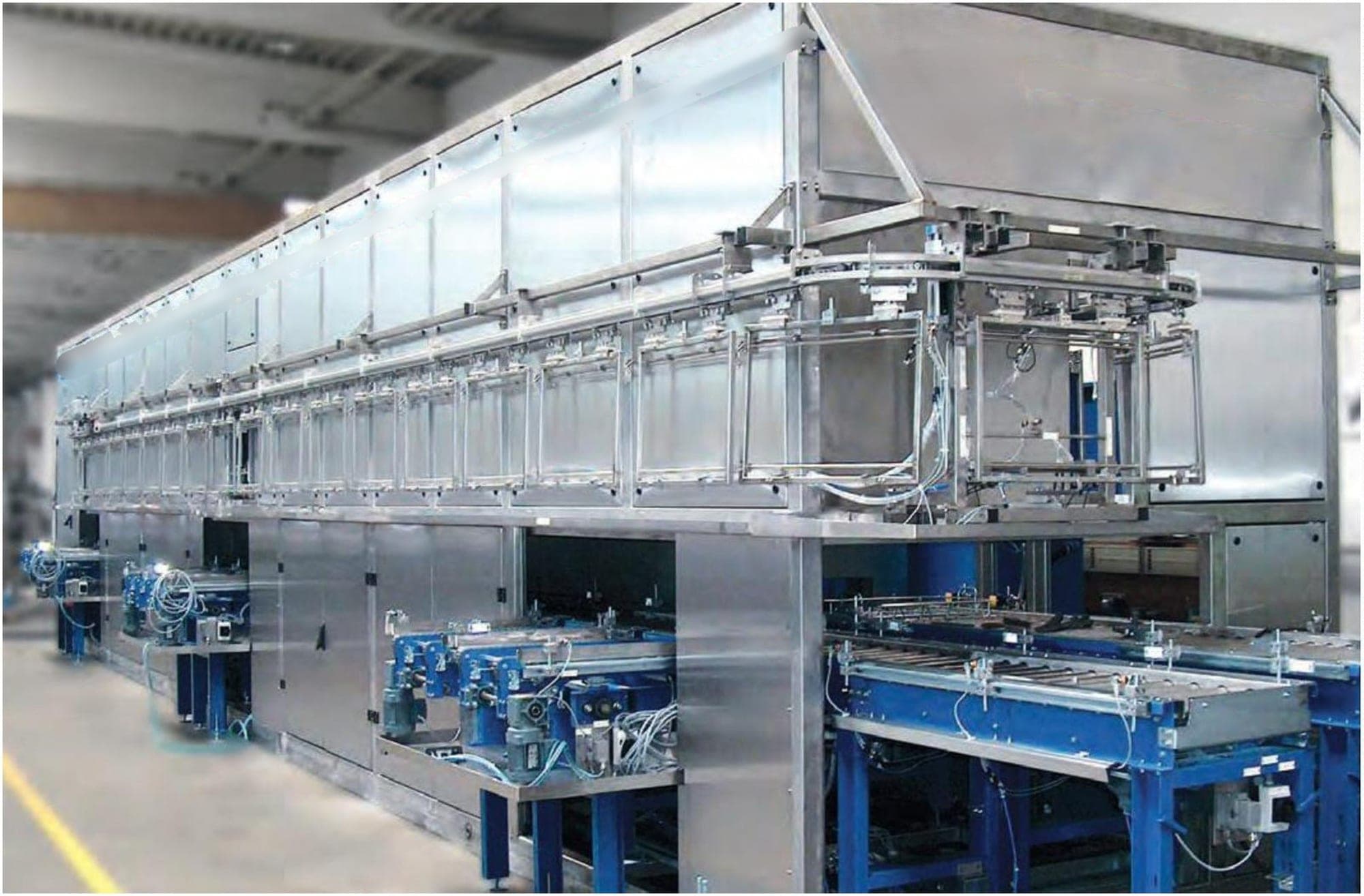
The task fits no machine type.
Special-Purpose Cleaning Systems
The starting point
The machine is the result of the system design, not its starting point
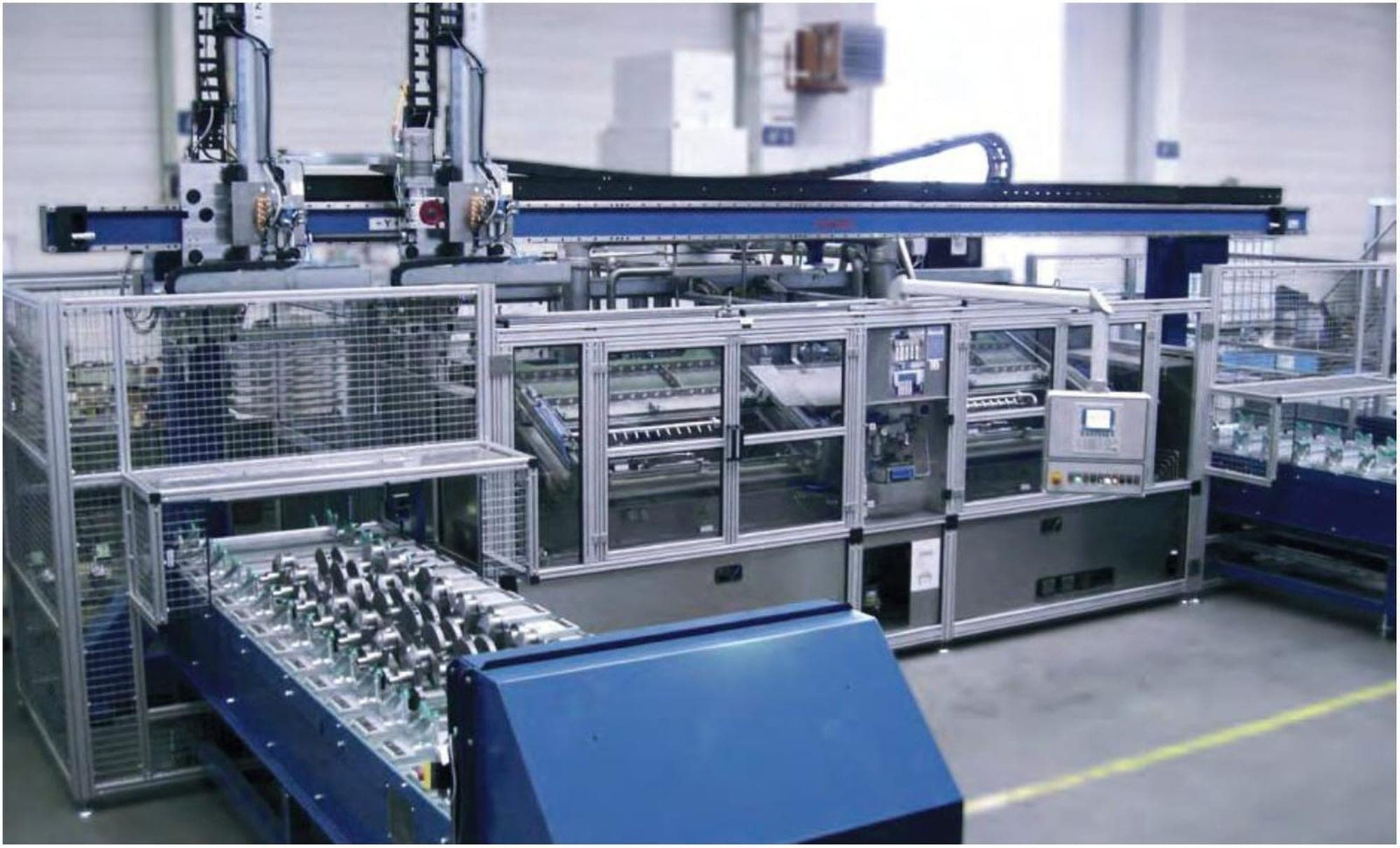
From that follows a system that did not exist in this form before. We have built, among others, systems for crankshafts, for washing out salt cores and for marine engines — tasks for which there is no catalog.
What they are built for
When no standard machine type solves the task
In special-purpose machine building, the way there is the same as in every project: technical clarification, assessment of the current state, system design, design engineering with stage-by-stage approval by you, manufacturing, factory acceptance test, installation, commissioning, operator training and ramp-up support.
You see every design stage before it is manufactured.
What we design for you
With a special-purpose system we design everything
Your component
Geometry, complexity, size, blind holes, through-holes, material, bulk parts or individual part.The contamination
Type, amount, required residual contamination values.Your production
Cycle time, production volume, drying requirement, whether deburring is also required.Water and media
Chemistry specifications, passivation requirements, water quality from city water through softened to DI water, water treatment, circuits and recovery.
And we do not only supply the system. Where needed, we design the complete water treatment and integrate it — osmosis, evaporators, treatment systems. Which water quality is necessary also depends on your downstream process: adhesive bonding, coating or painting place different demands than an intermediate cleaning. We look at your production, not only at the system.
Methods and building blocks
The entire modular system is available
In recent years we have worked above all on water recovery, energy efficiency and environmental compatibility — with cascade rinsing systems, vapor condensers and the return of the condensate into the process.
Automation
From manual loading to fully automatic line integration
Limits
We do not build solvent systems
Technically, we do not reject projects across the board. If we decline, it is more likely due to capacity or cost-effectiveness — and then we tell you exactly that.
Scope of supply
From a single source, as with every ITR system
Questions and answers
Frequently asked questions about special-purpose systems
What is a special-purpose cleaning system — and when do I need one?
How large can a system be designed?
Can several process steps be combined in one system?
Applications
Tasks for which there is no machine type off the shelf
Each case sets out the design factors, the possible system concepts and the methods in detail — here you only find what it is about.
Crankshaft
A crankshaft is long, sensitive to imbalance and has hard-to-reach bores — and that is exactly where oil, cooling lubricant and chips from machining sit.
Aluminum die-cast part
Contamination on an aluminum die-cast part adheres differently than a cooling lubricant — and what has to come out of the cavity sits in a geometry that was built for exactly that: to be inaccessible.
Defined part temperature
The component is clean and dry — and still not ready for handover: a part that is too warm is of no use for a leak test.
Large and heavy parts
Size and weight are not a surcharge on an existing system design: they act on system dimensions, payload, workpiece fixture and loading at the same time.
Also with a special-purpose system as a possible concept: Multi-stage cleaning process
None of these cases inevitably leads to a special-purpose system. Which concept it becomes arises from the interplay of the design factors — the machine type is the result of the system design, not its starting point.
Direct contact
Hauptstraße 31
93186 Pettendorf
Pettendorf bei Regensburg
Fax +49 (0) 9409-777 3607