The cleaning process is fast enough. The loading and unloading is not.
Rotary Indexing Cleaning Systems
What it is built for
A question of simultaneity, not of cleaning performance
Short cycle times
The actual lever of this machine type.Defined production process
With a constant process sequence.Reduced auxiliary times
Through parallel loading and unloading.
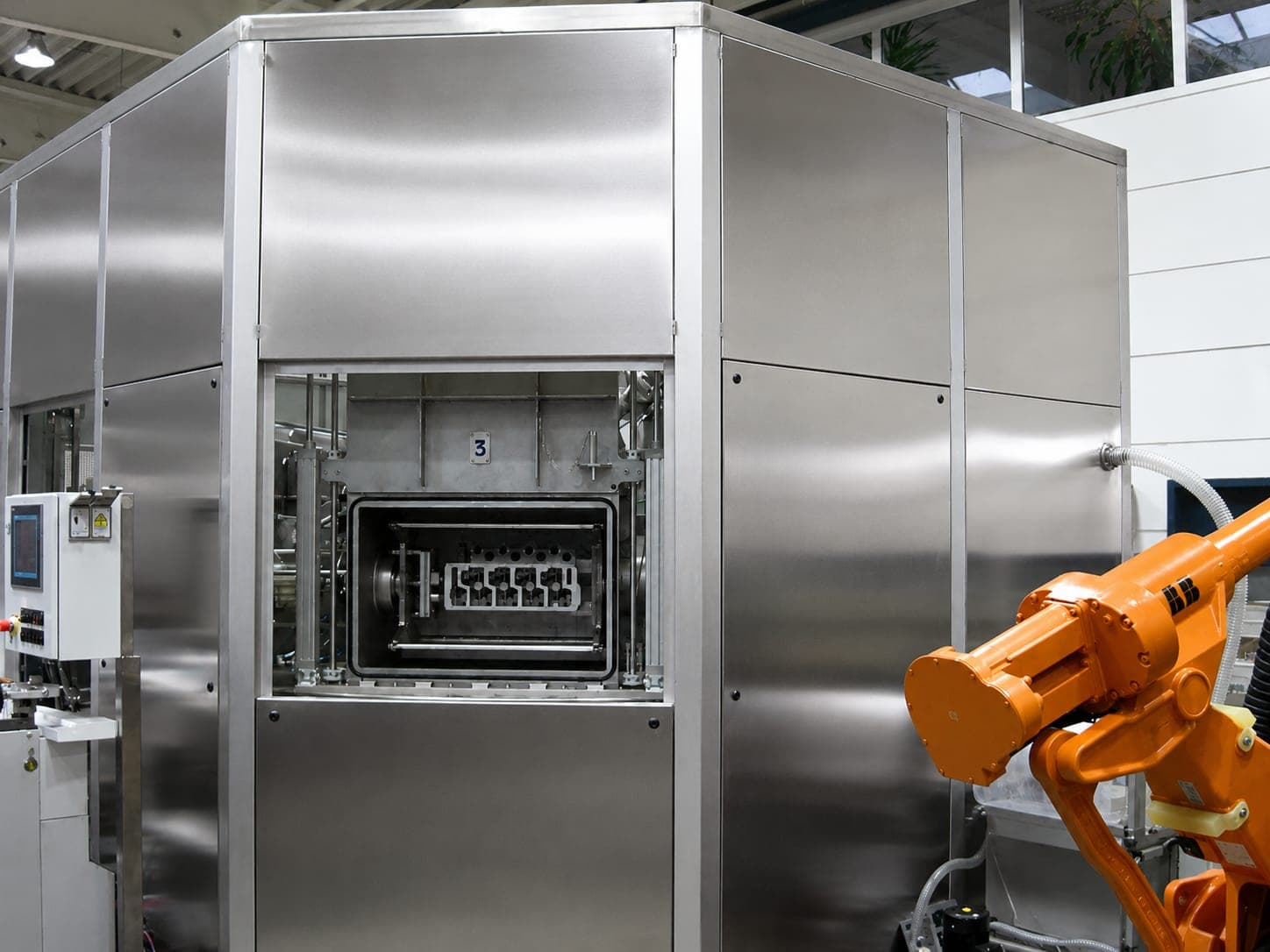
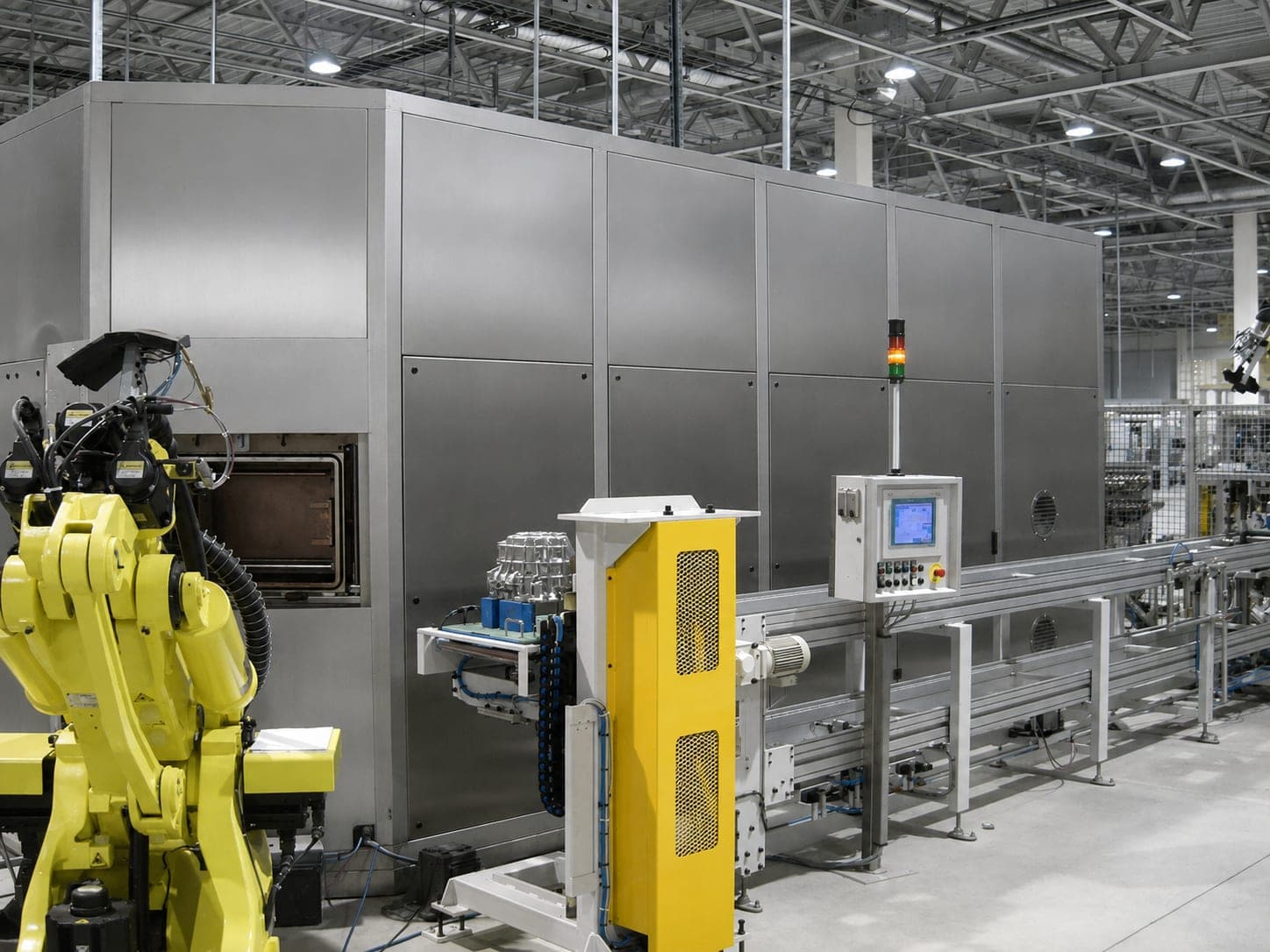
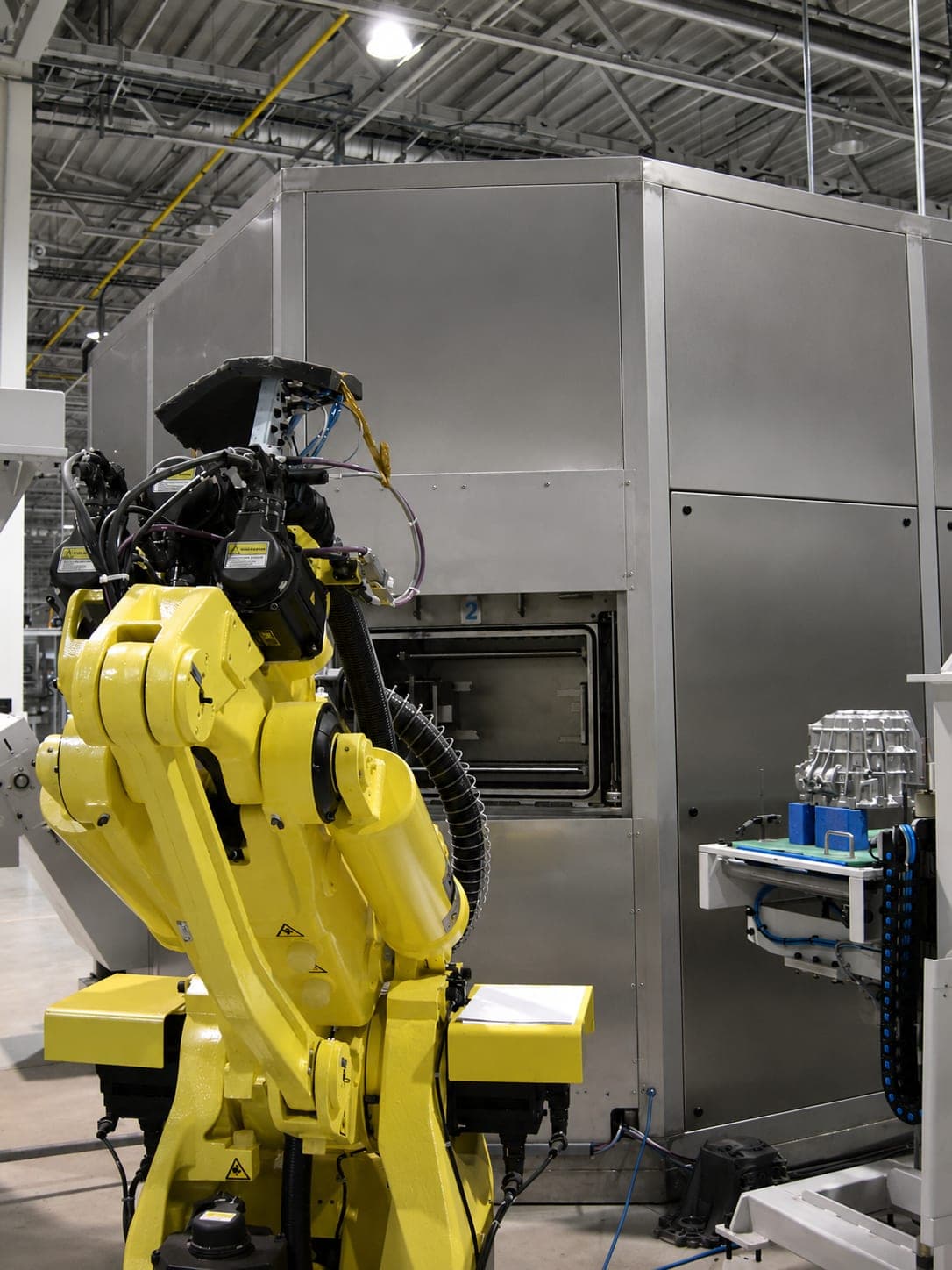
While cleaning, rinsing and drying take place at the stations, you are already setting up the next part at the loading and unloading position. The setup time no longer runs along in the cycle — it disappears from it. Because loading and unloading take place at the same point, the rotary indexing cleaning system is particularly well suited to robot loading: the robot approaches only one position, not two.
Typical workpieces
Series parts with a constant process sequence
Aluminum die-cast parts and steel parts in series, with a constant process sequence. Typical contamination: oil, emulsion, chips, dust.
Configuration and operating principle
Several process stations on one rotary platform
- 01LoadingAt a single position.
- 02CleaningDesigned in several stages.
- 03RinsingMedia maintenance integrated.
- 04DryingVacuum drying, cold or hot air.
- 05UnloadingAt the same position as loading.
- 06Second rinsing or dryingdepending on the system designDepending on the requirement.
- 07Air blow-off or vacuum dryingdepending on the system designFor high drying requirements.
The processes are designed in several stages, media maintenance is integrated, the system works largely without exhaust air.
Two points you should know about this machine type: the number of stations is fixed by the design — the process sequence cannot be extended at will later. And the slowest station sets the cycle of all the others. That is exactly why the division of the process steps is the decisive point of the system design here.
Designed for high positioning accuracy, compact build with a small footprint, low water consumption and twist-proof quick-release couplings.
Optional subassemblies
- 01
Drying
Vacuum drying, cold or hot air. - 02
Water treatment system
- 03
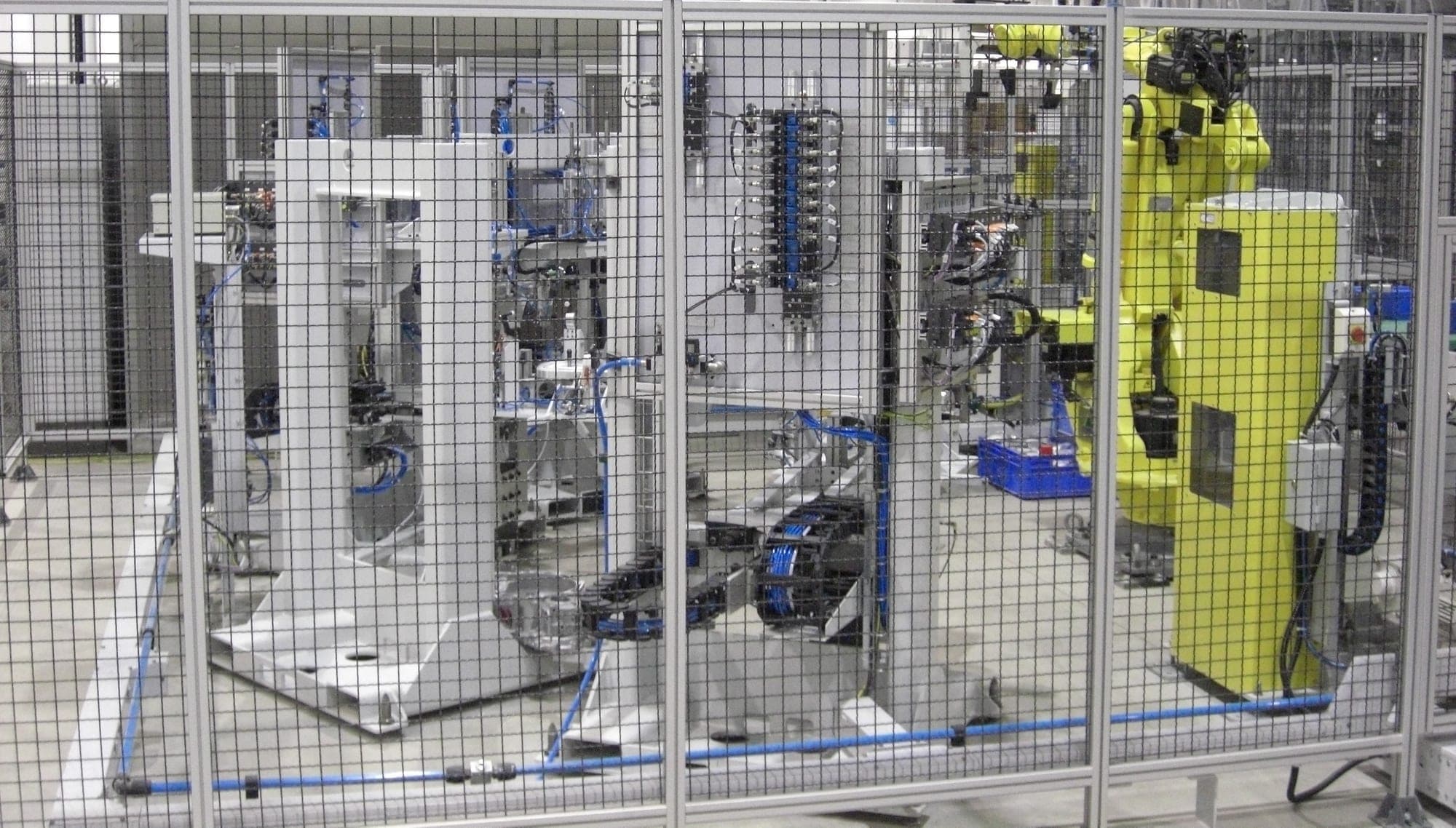
Automation and material flow and conveying
Not to be confused
Rotary indexing cleaning ≠ rotary indexing deburring
Rotary indexing cleaning systemRT
- Processing
- Cleaning
- Process principle
- The workpiece moves from station to station
Rotary indexing water jet deburring systemRT
- Processing
- Water jet deburring
- Process principle
- The workpiece remains in a closed processing chamber, the robot works inside the robot cell
What we design for you
There is no standard rotary indexing cleaning system
Your component
Geometry, complexity, size, blind holes and through-holes, material.The contamination
Type, amount, required residual contamination values.Your production
Cycle time, number of stations and method per station, loading and unloading concept, degree of automation, drying.Water and media
Chemistry specifications, passivation, water quality, treatment, circuits.
Automation
Built for robot loading and unloading
When another machine type is the better fit
The machine type is the result of the system design
- 01
Continuous cleaning system
When the cleaning is integrated into a production line and the parts are meant to pass through, or when many process steps are needed. There the number of zones can be chosen more freely. - 02
Chamber cleaning system
When your range of parts changes frequently or longer cycle times are permissible. - 03
Immersion cleaning system
When the component has to be fully immersed. - 04
Water jet deburring
When burrs additionally have to be removed.
Scope of supply
Vertical integration and digital system lifecycle
Questions and answers
Frequently asked questions about the rotary indexing cleaning system
What is a rotary indexing cleaning system?
Continuous flow or rotary indexing — what is the difference?
Applications
Components on which this system design is decided
Each case sets out the design factors, the possible system concepts and the methods in detail — here you only find what it is about.
Cylinder head
The spray jet hits what it sees — and what it does not see only becomes visible in the residual contamination verification.
Gearbox housing
Internal channels and bore intersections decide the method on the gearbox housing: spraying creates a spray shadow, not every surface can be reached. The more complex the geometry, the sooner immersion and flooding come into question instead of spraying.
Hydraulic manifold
A hydraulic manifold is not only installed, it carries flow — what stays in the channel stays in the system.
Valve block
Blind holes and branching channels are exactly the places a spray jet does not reach: it hits what it sees.
Also with a rotary indexing cleaning system as a possible concept: CrankshaftHigh technical cleanlinessMultiple part variantsMulti-stage cleaning process
None of these cases inevitably leads to the rotary indexing cleaning system. Which concept it becomes arises from the interplay of the design factors — the machine type is the result of the system design, not its starting point.
Direct contact
Hauptstraße 31
93186 Pettendorf
Pettendorf bei Regensburg
Fax +49 (0) 9409-777 3607