Spray cleaning
Simple geometries, few bores and blind holes — over the surface and fast, but with a spray shadow.
It is not the system that decides how cleaning is done — but where the process medium has to get to.
1 · The challenge
2 · The basic process
3 · The methods
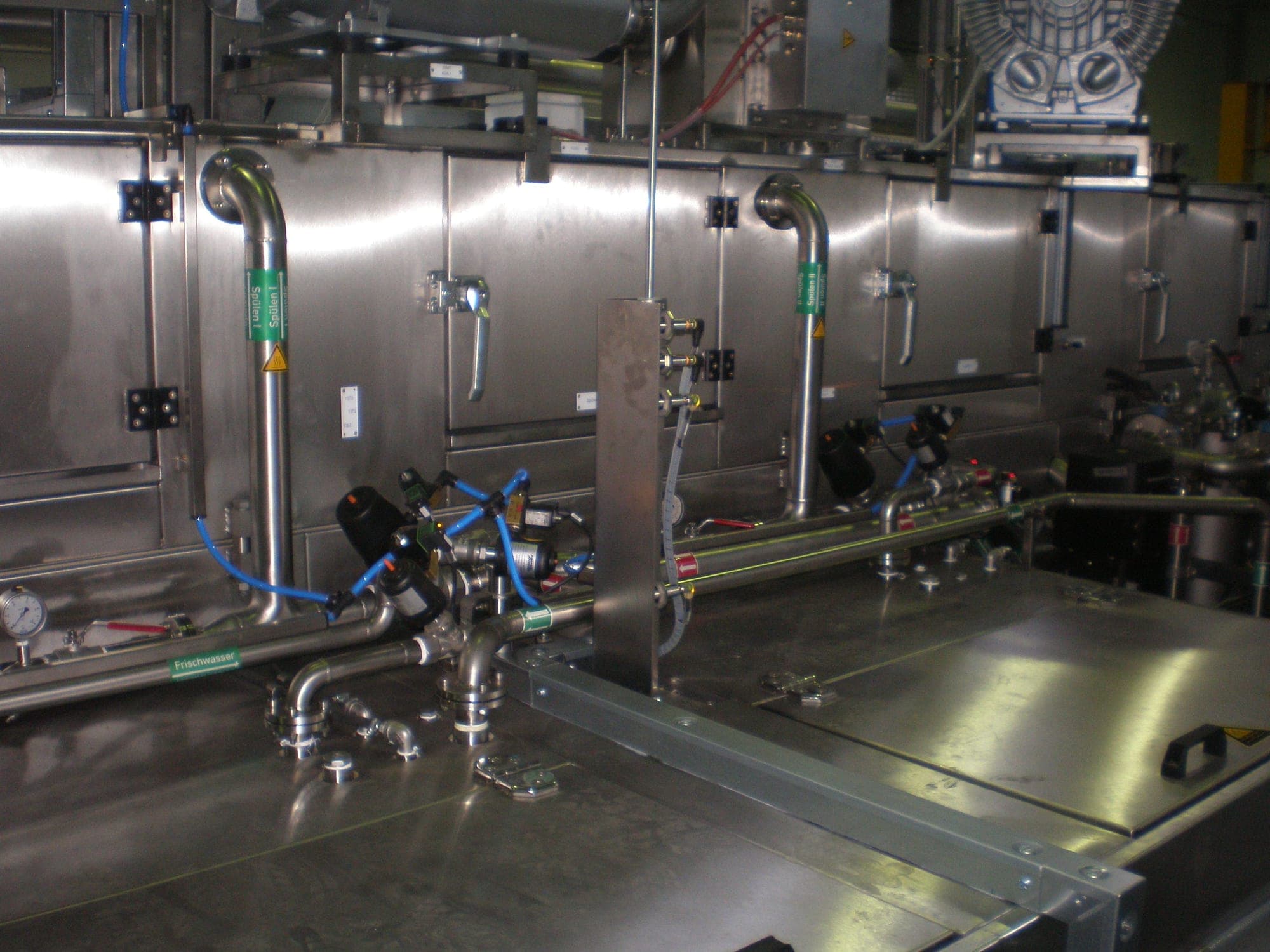
Simple geometries, few bores and blind holes — over the surface and fast, but with a spray shadow.
Complex components with many bores and blind holes — when the workpiece has to go fully into the medium.
Complex geometries and hard-to-reach areas — the process medium is guided with high volume over and around the workpiece.
Many bores and through-holes — cleaned in a targeted way instead of over the surface.
Ultrasonic cleaning and vacuum drying are options, not methods. An option supplements a method, it does not replace it: we use ultrasonic cleaning predominantly in immersion and flooding processes, vacuum drying for high drying and residual contamination requirements.
If burrs come into it, water jet deburring is the better solution.
4 · How the decision is made
A method rarely stands alone. Often several are combined: sprayed where the surface is accessible, immersed or flooded where it is not, and targeted with lances where a bore has to be flowed through.
Questions and answers