
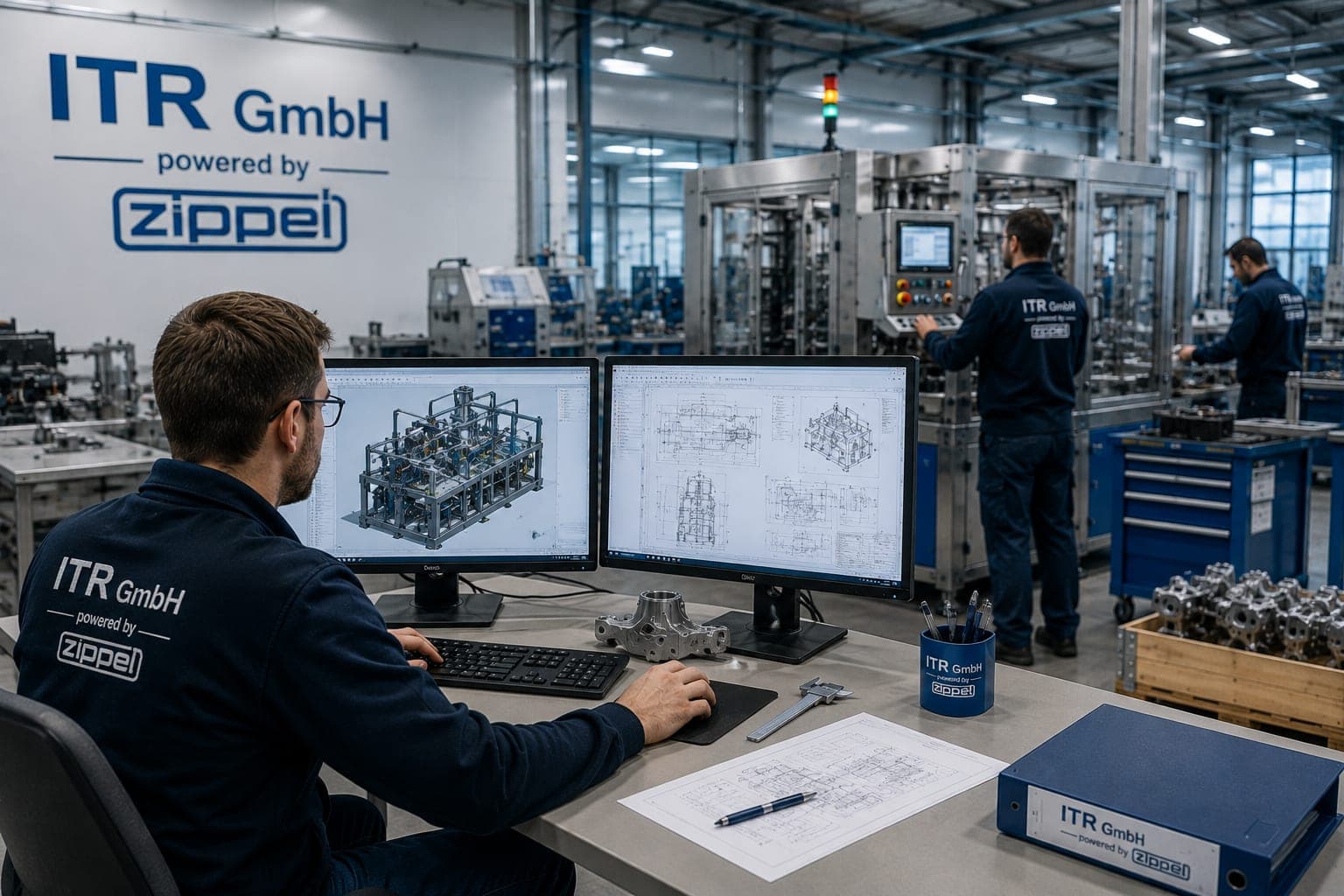
First understand the problem. Then design the machine.
Engineering

This is not a sideshow, but the actual service. With us, a cleaning or deburring system is never the starting point of an inquiry — it is the result of a system design. Whoever first chooses the machine and then forces the task into it builds a system that works in the brochure and not in production.
1 · The challenge
An inquiry rarely begins with a machine
Some customers already come with a requirements specification, some with a specified machine type. Others expect a technical recommendation. Both are welcome — but in both cases the same question stands at the beginning: is the task described completely at all?
Where a sound system design fails before it begins
With initial inquiries, almost always the same information is missing:
If this information is missing, no sound system design can be carried out — every statement about method, cycle time or costs would be guesswork. That is exactly why every project begins not with design engineering, but with clarification.
2 · Engineering considerations
A system is not designed around the machine, but around the task
How we think — the guiding principles
Understand the task before a machine is designed
Every system is thought through from the component and the process — not from a standard machine
A solution is only good when it works reproducibly in continuous operation and remains maintainable
What goes into the system design
A system design does not begin with a system type, but with what you have in front of you in production.
The component
Drawing, geometry, material, weight, as-delivered condition.The contamination
Type, amount, data sheets of the media used.The target
Residual contamination requirement, chemistry specifications, passivation.The production
Cycle time, production volume, material flow — how the components reach the system.
These parameters influence each other and are considered together. A higher production volume changes the cycle time, the cycle time the method, the method the workpiece fixture, the workpiece fixture the locations on the component that can be reached. There is no fixed rule “component X → machine Y” — and therefore no configurator that replaces the system design.
Where the limit lies
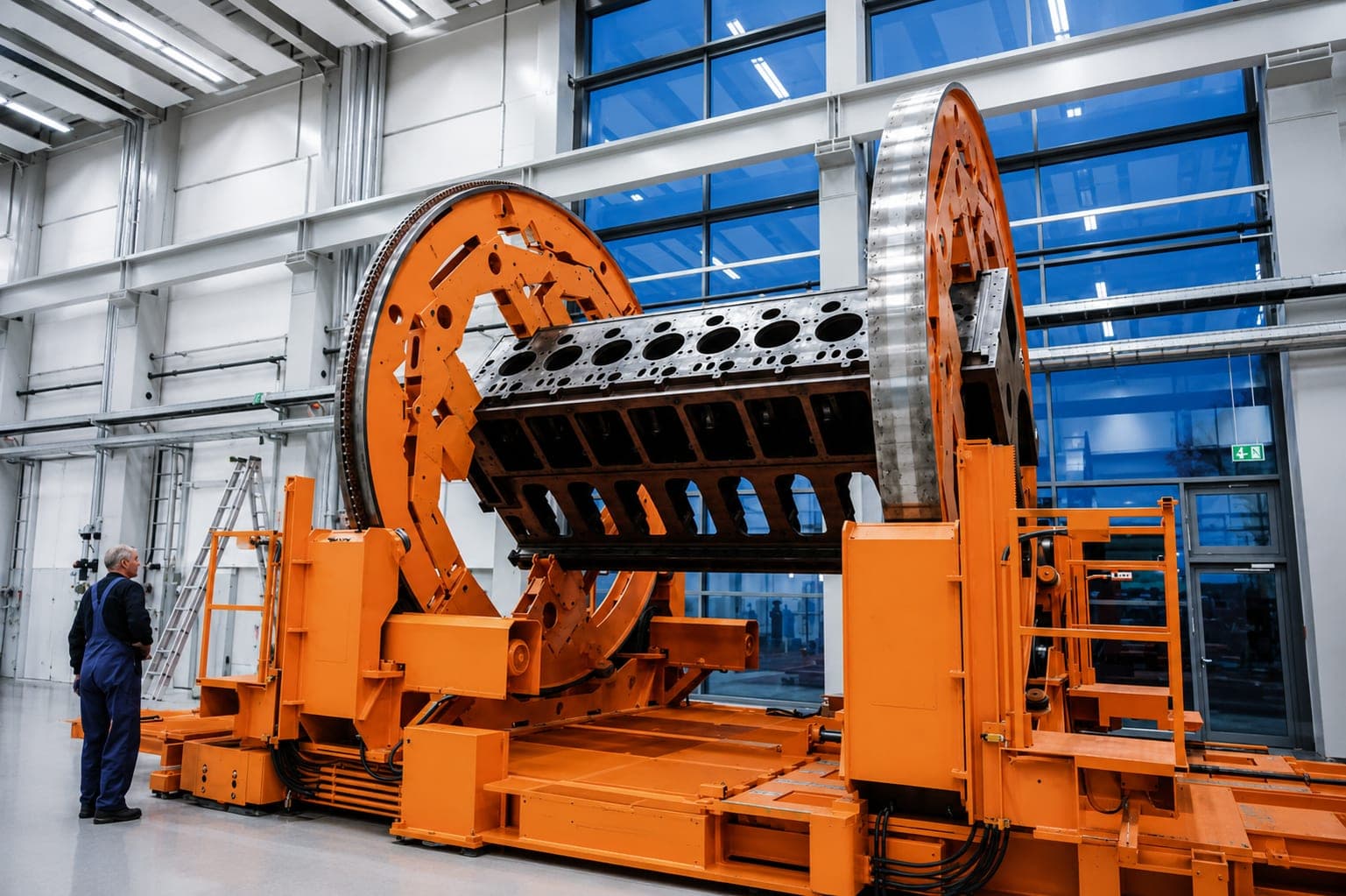
In principle, we try to solve every task technically. The limit rarely arises from the technology — but from unrealistic performance requirements, economic constraints and budget. If a residual contamination requirement is unrealistically low, we say so before the quotation, not after acceptance. That is not a refusal out of convenience, but the prerequisite for the promised values actually holding in the end.
3 · From the task to the system
A sequence that is always the same
The technical sequence
- 01InquiryThe task is recorded and checked for completeness.
- 02Technical analysisComponent, contamination, target and production are clarified.
- 03Concept and layoutMethod, configuration and arrangement arise from the analysis.
- 04TrialsWhere feasibility is not certain, it is tested — before anything is designed.
- 05Design engineeringMechanics, electrics and control system are worked out.
- 06SimulationThe system design is calculated through before steel is cut.
- 07ManufacturingBuilt in our own company.
- 08Factory acceptance test (FAT)Inspection in the factory before the system leaves the building.
- 09Site acceptance test (SAT)Second acceptance after installation at your site.
Two steps in it are the reason why the later system works and does not merely look plausible: the trials, because feasibility is tested on the task and not on the model — and the simulation, because the system design is calculated through before anything is built.
If defined residual contamination values are required, they are checked at the factory acceptance test, in our own factory. The analysis itself is carried out by an independent, accredited test laboratory, not by ITR.
This technical sequence is the backbone of the project. It is embedded in the complete project workflow from the order through installation and commissioning to long-term support.
What we design for
These principles are not an ingredient added at the end, but constraints from the outset. A system that reaches the values but is not maintainable has solved the task only halfway.
Why there are no data sheets
As a matter of principle, we develop customer-specific special-purpose systems. A standard machine is not the starting point of the design engineering — and therefore there are no fixed specifications from which to calculate. What a data table does for other suppliers, the system design does here: it is created project-specifically and stands in the quotation, not in the brochure.
4 · The result
Reproducibility is the actual goal
That is what distinguishes a designed system from a purchased one: a residual contamination value reached once is no verification if it cannot be repeated. That is exactly what the entire sequence from section 3 is aimed at.
How quality is verified
Before delivery, we test the system with original components. Depending on the project, this includes:
When an existing system is to fulfill the new task
Not every changed task needs a new system. In retrofit projects, previously unknown constraints regularly appear — they are analyzed during implementation and solved by design engineering. Retrofit is thus not an exchange of parts, but engineering work on the existing stock: the same way of thinking, applied to a system that is already standing.
What we have in our own company for this
That system design, design engineering, control cabinet manufacturing, programming and verification come from a single source is the prerequisite for this thinking process to carry at all. Whoever takes responsibility for the result has to master the chain behind it.
What a system costs — and what it depends on
No special-purpose system builder names a price in advance, and for a factual reason: there is no standard system from which to calculate. What a system costs follows from what it has to deliver — from the required cleanliness, the cycle time, the production volume, the degree of automation, the number of process steps and the media treatment. Each of these requirements shifts the effort, and no two tasks are the same.
Added to this are three quantities that follow less from the required performance than from the extent of the system: the part size, which determines the installation space and thus the entire mechanics, the filtration and the documentation scope, which can be considerable in projects subject to acceptance.
That is why the price of a system from us is not a surcharge, but the reflection of the requirements it meets — and of the quality with which it does so permanently. Whoever buys a system that holds the values reproducibly and remains maintainable for decades is not investing in a component, but in a production that will change.
Where this engineering takes effect
The same approach stands behind all three service areas
Questions and answers
Frequently asked questions before the quotation
What information do you need for a quotation?
How do you design a system?
Can I submit my own requirements specification?
Why are there no data sheets?
Where is the limit of what is feasible?
What do you design for?
What does a system cost?
Which factors influence the price?
Why do you need 3D data of the component?
Direct contact
Hauptstraße 31
93186 Pettendorf
Pettendorf bei Regensburg
Fax +49 (0) 9409-777 3607
Technically responsible for this page: Tizian Zippel — Head of Engineering & Technology