The question is not whether a part fails. It is whether you will still get one in ten years.
Spare parts for parts cleaning systems

1 · The challenge
At the time of purchase nobody thinks of the pump that fails in eight years
For a special-purpose system that is no trivial question. It is not a catalog product, its subassemblies are project-specific — and still a heating element or a sensor has to be available at short notice when it fails.
2 · What is needed most often
It is always the same parts
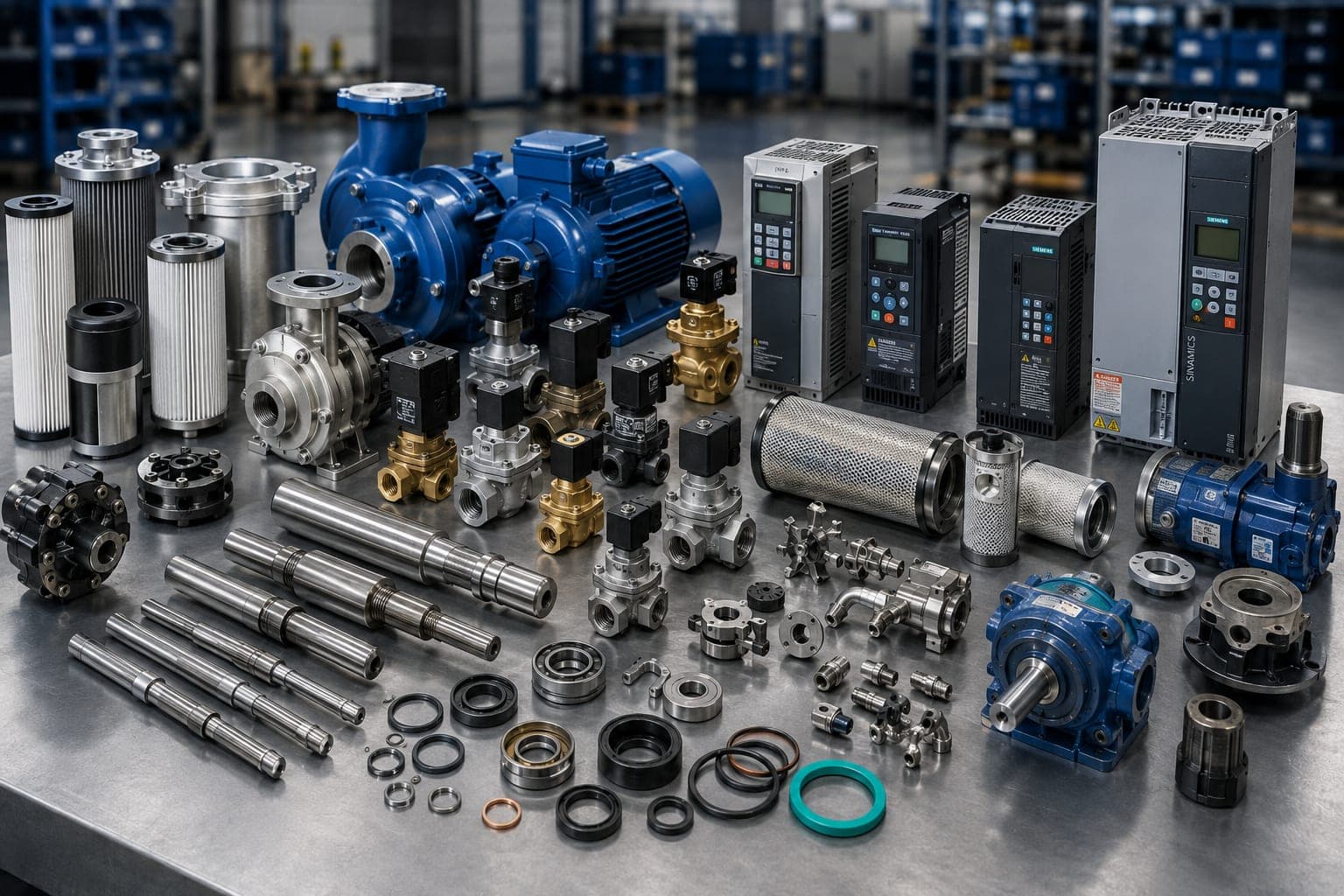
That is consistent across all sources in the company — design engineering names heaters, sensors and pumps as the most frequent spare parts, project management the pump replacement, service heating elements and sensors.
There is no statistical ranking — the statement is based on experience, not on an evaluation.
3 · How the supply is carried
Two things keep the supply open
The spare parts list is on the system
Which part is installed, which designation it carries, which alternative fits — that is in the digital machine database, accessible via the QR code on the system. That shortens the way from failure to the right order: no guessing about types, no searching in old documents.
Manufacturer-independent where it serves the supply
Because ITR works with proven standard components and not with a supplier lock-in, many parts are available long-term via established manufacturers — and where a make is discontinued, a technically suitable one is integrated.
4 · The result
We support systems that have been in operation for 30 to 35 years
When a part can no longer be sourced
The way often leads to a retrofit — the outdated subassembly is not replaced, but superseded by a current one.
Questions and answers
Frequently asked questions about spare parts
How long is the spare parts supply secured?
Which spare parts are needed most often?
How do I know which spare part I need?
By which criteria do you select components?
Do you keep spare parts in stock?
Direct contact
Hauptstraße 31
93186 Pettendorf
Pettendorf bei Regensburg
Fax +49 (0) 9409-777 3607