
Robotics
Robot cells for gripping, transferring, positioning, loading and unloading — wherever it pays off.
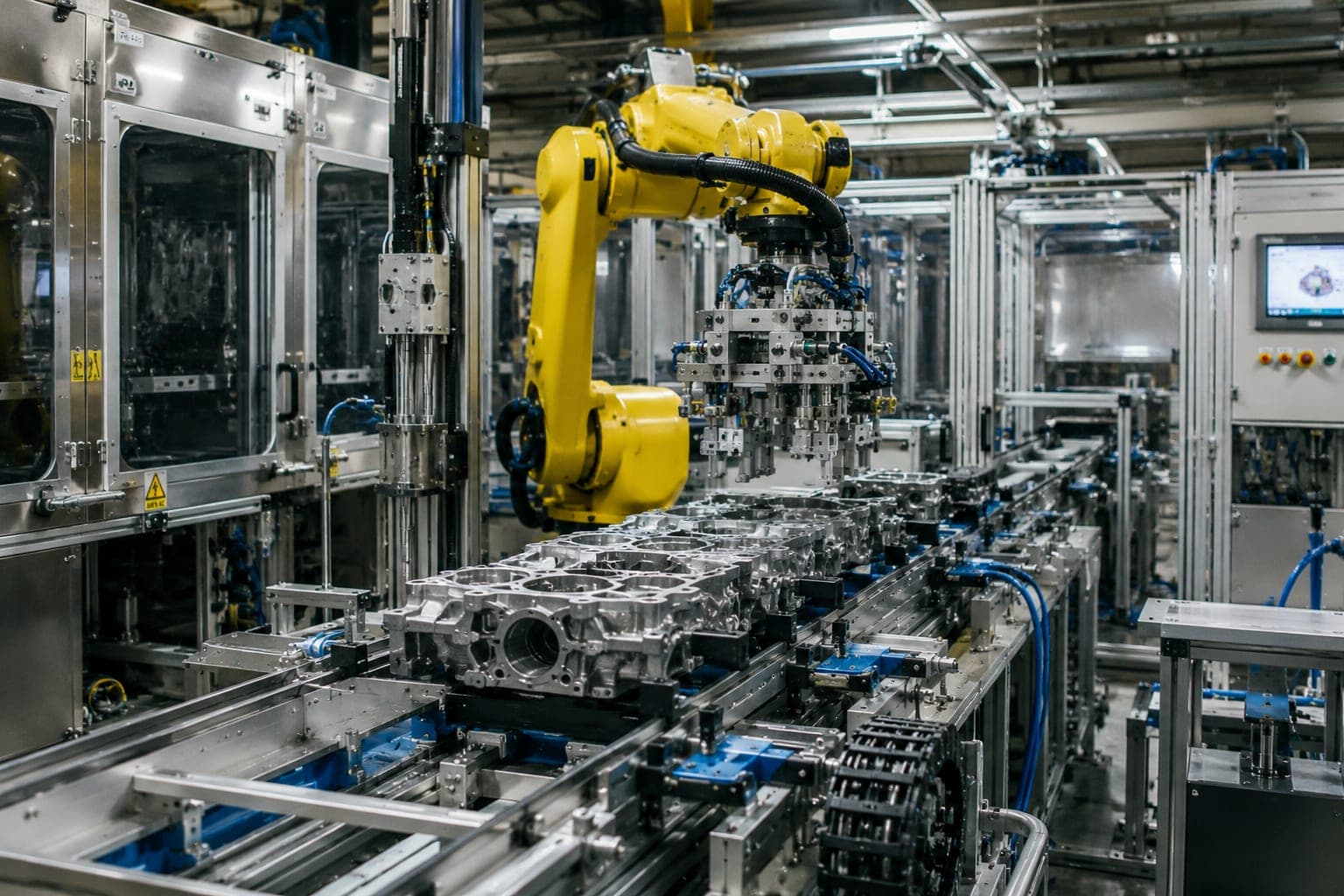
Technically, almost anything can be automated. The question is whether it pays off.

1 · The challenge
2 · Engineering considerations
On the technical side, production volume, cycle time, workpiece size and weight, part geometry, range of parts, degree of automation, existing systems and space conditions, availability requirement and customer-specific specifications are weighed.
At the beginning stands the assessment of the current state: which steps run manually today, how long they take, where waiting times arise, where quality fluctuates. Only from that does it follow which step belongs automated — and which does not. Often it is not the one you suspect first: a single bottleneck sets the cycle of the whole line.
The same axis from both ends: high production volumes speak for an automation, low ones against it. Where your case lies, we tell you before you invest.
3 · The solution concept
Robot cells for gripping, transferring, positioning, loading and unloading — wherever it pays off.
Part feeding, buffering, line integration of several processes, palletizing and depalletizing.
Integration into existing production lines when none of the standard tasks fits on its own.
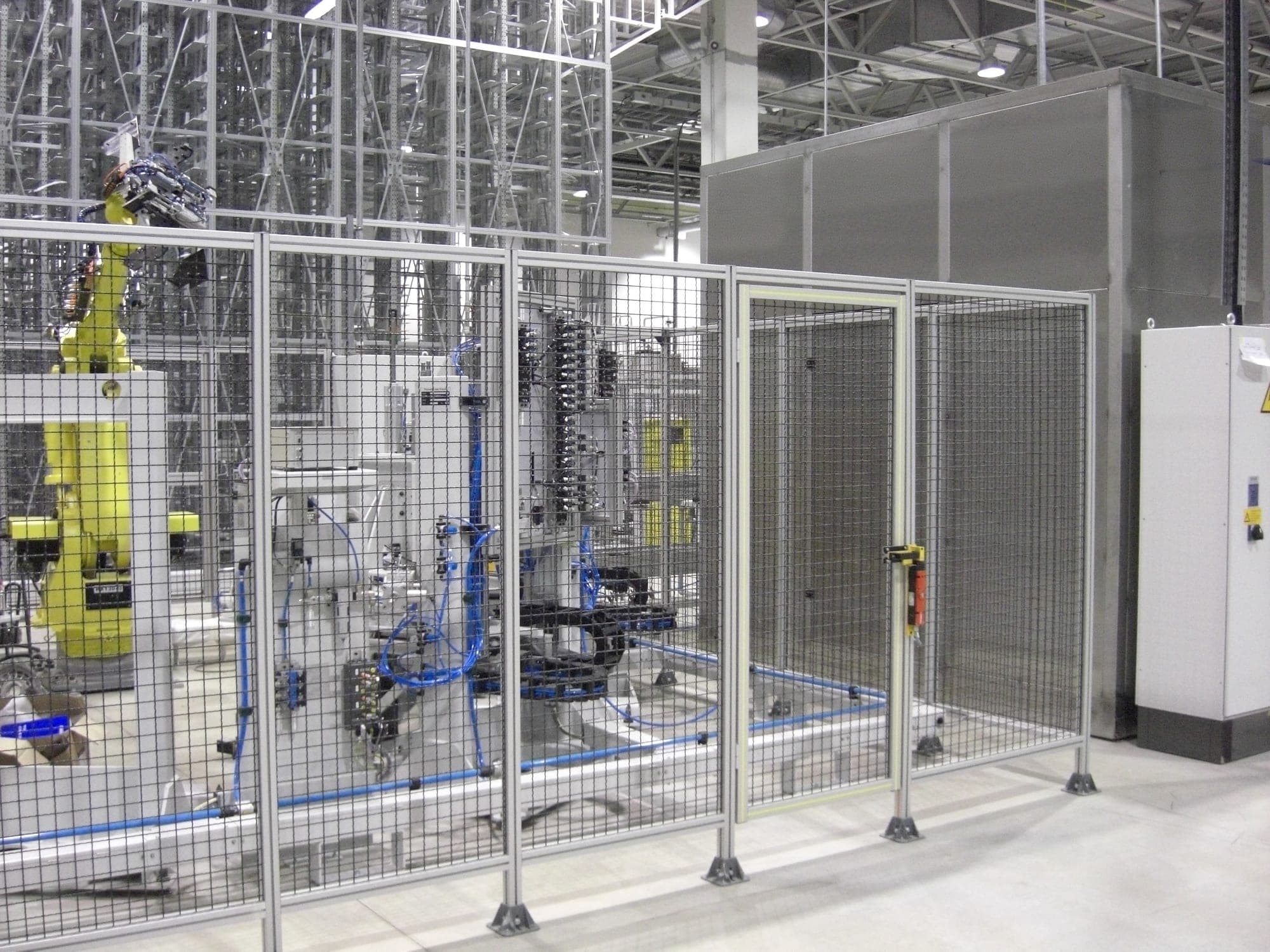
Where a system is integrated into an existing production, it is decided at the transfer points, the cycle coordination and the workpiece fixture — at the position and the time in which the component has to arrive at the next station. Because cell, control system and safety technology come from a single source with us, the responsibility for this transfer does not lie between two suppliers.
On the same level lies the connection to higher-level systems. Which data your production control receives from the system, and in which form, is part of the system design just like cycle time and media routing — the interface is defined in the project, not fixed in advance.
4 · The result
Already realized
A need for automation arises in every production that runs in cycles. The list therefore does not draw a boundary — it names the industries in which systems of ours are installed.
With us, parts cleaning and deburring systems are loaded and unloaded automatically, integrated into lines and linked up. Automation is thus also the technology that runs through our two core pillars.
Questions and answers
Technically responsible for this page: Fikret Önal — Managing Director